
New Funding Opportunity: King’s-Ramón Areces Foundation PhD Scholarship (K-FRA)

Yutong Liu & Digit / https://betterimagesofai.org / https://creativecommons.org/licenses/by/4.0/

The Department of Digital Humanities is delighted to announce a prestigious new doctoral scholarship scheme, offered in partnership with the Ramón Areces Foundation.

The King’s–Ramón Areces Foundation PhD Scholarship Programme (K-FRA) is designed to support a researcher of Spanish nationality in undertaking full-time doctoral study within our department, starting in October 2026.

A comprehensive support package

The scholarship provides an exceptional level of support over three years of research, including:

  • Full tuition fees covered for the duration of the programme
  • An annual stipend of £22,780 (including London Weighting)
  • A £1,000 annual grant for research training and related support
  • Overseas student health cover and a standard-class return airfare between London and Madrid

Research themes

We welcome applications across the full breadth of Digital Humanities. We are particularly keen to receive proposals aligned with digital methods and cultural heritage, computational humanities and cultural AI, digital identities or governance, including projects that apply digital tools within the arts or wider cultural sectors.

As Paul Spence, Reader in Digital Humanities, notes:

The King’s-Ramón Areces PhD Scholarship Programme enables outstanding researchers to pursue innovative, internationally oriented doctoral work, strengthening long-standing academic links between UK and Spanish digital humanities researchers.

Key dates and how to apply

Application closing date: 13 February 2026.

To support prospective applicants, we will be hosting an online information session on 12 January, from 15.00 to 16.00 (UK time). To register your interest and receive access details, please complete the online registration form.

The session will provide further information about the programme, the application process, and the specific terms and conditions set by the Ramón Areces Foundation.

Find out more

For full eligibility criteria and detailed application instructions, please visit the official page of the King’s–Ramón Areces Foundation PhD Scholarship Programme (K-FRA).
Best overall student in MA Digital Humanities, 2024-2025

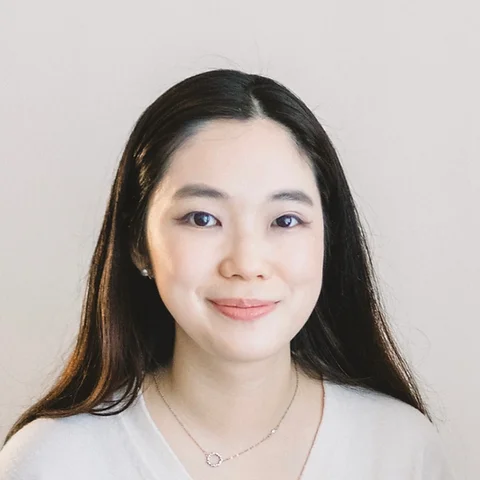
Congratulations to Kesara Ariyapongpairoj for being awarded “Best Overall Student in the MA Digital Humanities” in 2024-2025. 🎊

Kesara is a MA Digital Humanities graduate from King’s College London with a background in Philosophy. Her research focuses on how digital media and emerging technologies have transformed the production and dissemination of information, and the socio-political and cultural impact of online narratives in shaping belief systems and ideologies.

Continue reading “Best overall student in MA Digital Humanities, 2024-2025”

a late autumn co-learning workshop on digital methods for social and cultural research

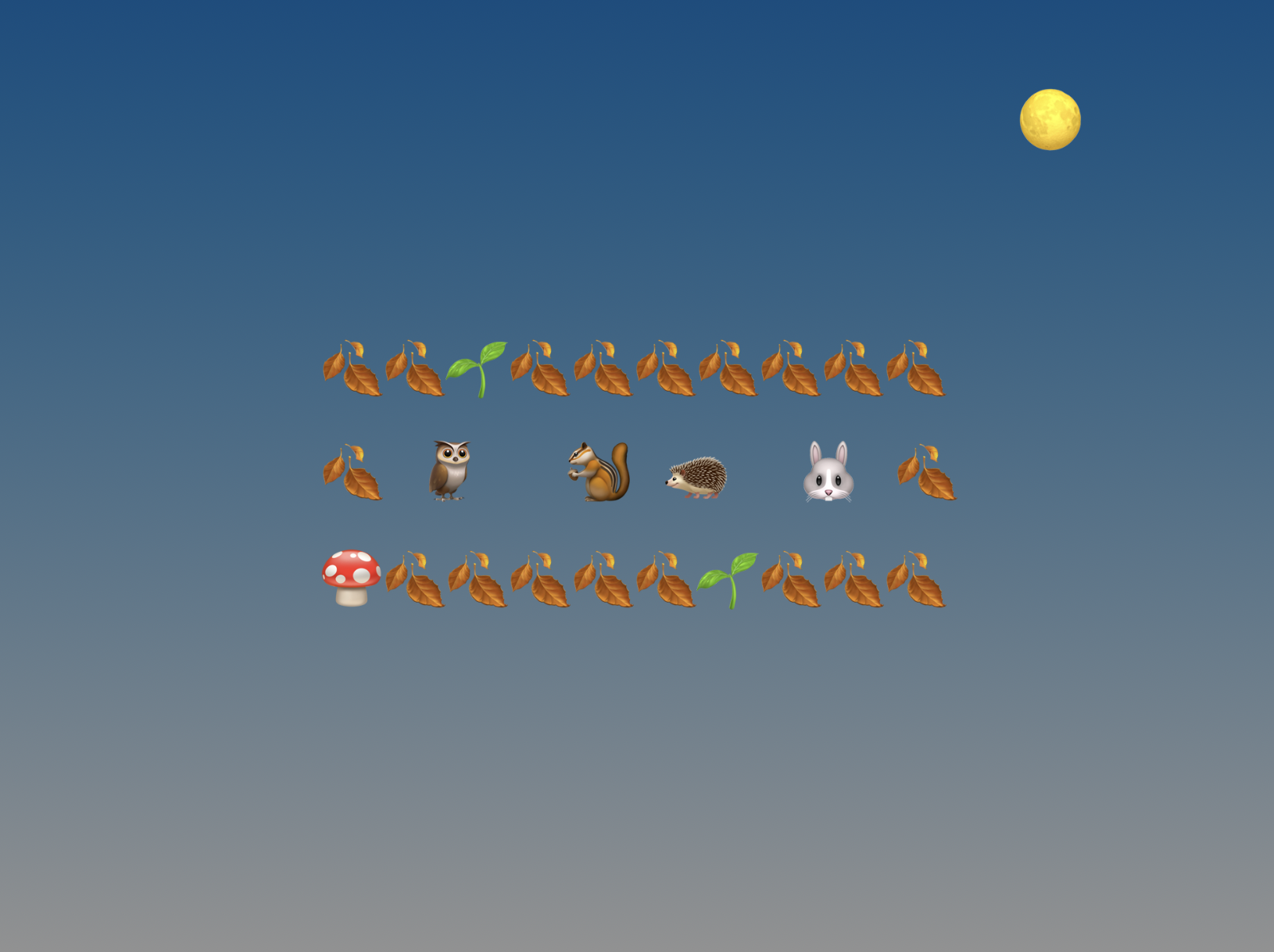
Last week Claudia AradauLiliana Bounegru and Jonathan Gray co-organised a late autumn co-learning workshop on digital methods for social and cultural research. 🍂🌱🐿️🦔

Continue reading “a late autumn co-learning workshop on digital methods for social and cultural research”

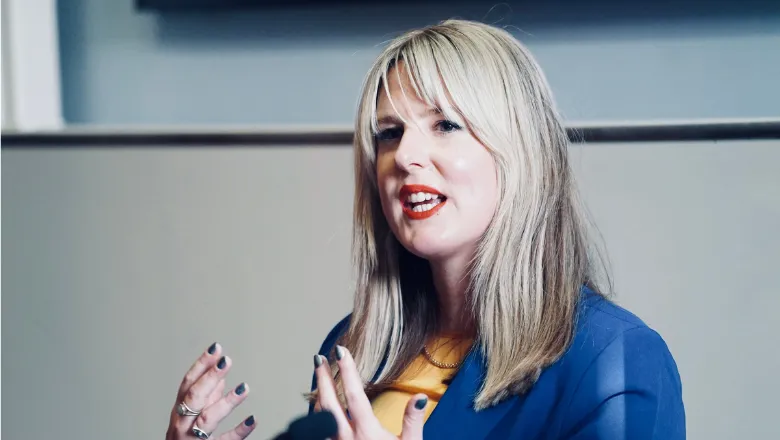
Dr Rachael Kent wins historic case against Apple in £1.5 billion collective action

The case, Kent v Apple, was brought by Dr Rachael Kent, Senior Lecturer at King’s College London, who made history as the first female Class Representative in the UK’s collective action regime.

Dr Rachael Kent
Continue reading “Dr Rachael Kent wins historic case against Apple in £1.5 billion collective action”

New Research Explores Gamified Friendships and Digital Intimacy on Douyin

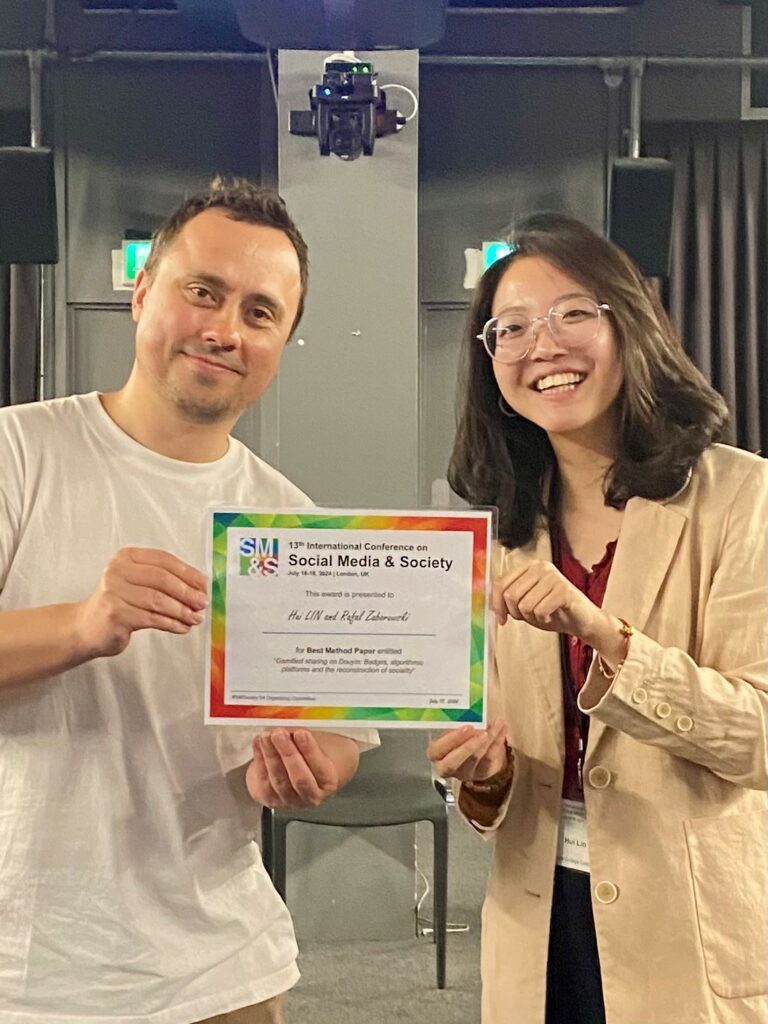
A new open-access article by Hui Lin and Dr Rafal Zaborowski, both from the Department of Digital Humanities at KCL, examines how the Chinese platform Douyin (internationally known as TikTok) gamifies everyday social interaction.

The article was first presented at the 2024 International Conference on Social Media & Society where it was honoured with the prestigious Best Method Paper Award.

Continue reading “New Research Explores Gamified Friendships and Digital Intimacy on Douyin”

Conference: “Quantitative Diachronic Linguistics and Cultural Analytics: Data-Driven Insights into Language and Cultural Change”

15-16 January 2026, King’s College London (Strand Campus)

Official website with the full call for abstracts here.

We invite submissions for the conference Quantitative Diachronic Linguistics and Cultural Analytics: Data-Driven Insights into Language and Cultural Change, to be held at King’s College London (Strand Campus, WC2R 2LS) on 15–16 January 2026. This is an in-person event.

Continue reading “Conference: “Quantitative Diachronic Linguistics and Cultural Analytics: Data-Driven Insights into Language and Cultural Change””

DANTE-AD: Dual-Vision Attention Network for Long-Term Audio Description

Wednesday 28 May 2025

12:00 PM – 2:00 PM

Location: WC2R 2LS

To register for this event, please follow this link.

Andrew Gilbert (University of Surrey), DANTE-AD: Dual-Vision Attention Network for Long-Term Audio Description

Continue reading “DANTE-AD: Dual-Vision Attention Network for Long-Term Audio Description”

Publication: Dell’essere-a-misura: corpie quantificazione

DDH’s Prof. Btihaj Ajana publishes a chapter in Italian language in the volume, “Incorporazioni: Prospettive storiche e teoriche”, edited by Angela Michelis and Francesco Pisano. The volume focuses on the multifaceted concept of the body, examining its role in shaping identity and subjectivity through a historical and conceptual lens.

Seminar | Ambiguity and Archive: Computational Hermeneutics of Conflict Poetry through RAG

Event organised by the Computational Humanities research group.

To register to the seminar, please fill in this form.

27 May 2025 – 4:30pm BST

Remote – Via Microsoft Teams.

In person – Details shared upon registration.

Jenny Kwok (University of Hong Kong), Ambiguity and Archive: Computational Hermeneutics of Conflict Poetry through RAG

Abstract

This presentation proposes a methodological bridge between computational literary studies and conflict historiography through AI-augmented archival analysis. Focusing on Northern Ireland’s Troubles poetry, the study leverages the Conflict and Politics in Northern Ireland Archive (CAIN) to construct a Retrieval-Augmented Generation (RAG) framework that dynamically contextualizes poetic ambiguity within historical narratives.

The framework reconciles the scalability of AI with humanities rigor by integrating close reading practices, machine-assisted contextualization, and archival metadata. It establishes a replicable model for analyzing contested histories while prioritizing political sensitivity through localized AI training, demonstrating how resource-limited institutions can conduct computationally intensive scholarship without dependence on proprietary systems.

A comparative analysis of humanistic and computational methods reveals that hybrid approaches—where archival grounding tempers machine learning outputs—reduce historical projection biases in sentiment analysis. This proves critical when interpreting poetic devices encoding sectarian dualism (e.g., metaphorized territoriality in Seamus Heaney’s work). The study further critiques the temporality of AI-archival integration, arguing that dynamic context-retrieval systems avoid flattening historical nuance compared to static training corpora.

The presentation concludes by proposing toolkits that enable scholars to employ for other conflict literatures, emphasizing adjustable parameters for geopolitical specificity. By decentralizing AI infrastructure and foregrounding archival multiplicity, this work advances interdisciplinary debates about computational criticism’s capacity to engage ethically with traumatic histories.

Bio

Dr. Jenny Kwok is Research Assistant Professor of the Faculty of Arts, University of Hong Kong, where she also serves as the Lab Coordinator of the Arts Technology Lab. Dr. Kwok’s research advances AI workflows for literary analysis, focusing on Irish conflict literature. She develops retrieval-augmented generation (RAG) systems to contextualize the ambiguity of Troubles-era poetry within historical archives, and fine-tunes LLMs for semantic analysis of Irish literary corpuses. Her methods prioritize sociopolitical sensitivity and literary nuances, countering AI’s tendency to flatten contested narratives.

Her forthcoming work proposes frameworks for democratizing AI in the humanities, emphasizing explainable AI (XAI) tools. This aligns with her reinterpretation of pre-digital methodologies (e.g., Josephine Miles’ concordance work) as blueprints for hybrid human-machine interpretation.

Dr. Kwok holds fellowship at the Cambridge Digital Humanities (2024-2025) and is Gale Scholar Asia Pacific, Digital Humanities Oxford (2026).

Work-in-Progress Symposium for PGR Students in Digital Humanities

The Symposium is organised by Isaac Parkinson.

To attend, please register here.

We are excited to invite you to the Work-in-Progress Symposium for Postgraduate Researchers in Digital Humanities, where PhD Students will share the progress of their research and engage with their peers through constructive feedback and discussions.

Event Details:

• Date: 16th May 2025
• Time: 11am-3pm
• Location: Embankment Room (MB-1.1.4), Macadam
• Food: Light lunch and refreshments provided

This symposium is an excellent opportunity for students to present their research thus far, exchange ideas, and receive valuable insights from the academic community. Whether you are presenting or attending, your participation will contribute to a lively and supportive atmosphere.

If you are a PGR student in Digital Humanities at King’s College London and would like to present, please submit a brief abstract of your work (max 250 words, with your title, name and email address) to isaac.1.parkinson@kcl.ac.uk by 18 April 2025.